

 English
  русский
  Español
  عربى
عربى  中文简体
中文简体

 Industry News
Home / News & Share / Industry News / Wholesale Lubricant Oil Suppliers: Choosing a Manufacturing Partner That Delivers
Wholesale Lubricant Oil Suppliers: Choosing a Manufacturing Partner That Delivers
200+ proven lubricant solutions delivered
Content
- 1 What a Wholesale Lubricant Supplier Must Be Able to Prove
- 2 Product Coverage: From Engine Oil to Industrial Lubricants
- 3 How OEM/ODM Support Changes the Wholesale Equation
- 4 A Practical Checklist for Choosing a Wholesale Lubricant Supplier
- 5 Final Thoughts: Build a Supply Chain Around a Manufacturer, Not a Trader
Every lubricant buyer has faced the same dilemma: two suppliers quote similar prices, but one is a trader and the other owns the blending plant. The choice seems obvious, yet many wholesale purchasing decisions still rest on price alone. That approach often leads to inconsistent viscosity grades, delayed deliveries, and labels that overpromise for the actual formulation. A single bad batch of engine oil can damage a distributor's reputation across hundreds of retail customers, and the cost of a recall often exceeds the savings from a cheaper price. A more reliable route is to evaluate wholesale lubricant oil suppliers the way you would assess any long-term manufacturing partner: by examining production capacity, quality systems, product coverage, and the ability to support a private brand.
The conclusion is straightforward: for most distributors, importers, and fleet operators, a vertically integrated lubricant manufacturer delivers more stable supply, better technical support, and a faster path to customized products than a traditional trading house. The rest of this article explains what to look for and how LEANON Petroleum fits that profile.
What a Wholesale Lubricant Supplier Must Be Able to Prove
Before you place a bulk order, you need evidence that the supplier can actually deliver the volume, quality, and consistency your market demands. A factory visit is valuable, but not practical at the initial screening stage. Instead, use these four criteria.
Production Capacity and Delivery Stability
Capacity is the first filter. A supplier with no meaningful manufacturing base cannot guarantee stable lead times when demand spikes. LEANON operates a 150,000-ton annual production facility on an 80,000-square-meter site, backed by a 200 million RMB investment. The company also highlights its intelligent factory facility, which supports automated blending and filling. For a wholesale buyer, this translates into capacity for routine reorders and the flexibility to handle seasonal spikes without continuous supply interruptions. For private-label projects, this is even more important because the supplier must run additional filling lines without disrupting existing orders.
Quality Control and Third-Party Compliance
Consistency in lubricant quality matters more than any single specification because engines and machines depend on repeatable performance. A credible wholesale supplier documents its quality system. LEANON is certified to ISO 9001, ISO 14001, ISO 45001, and IATF 16949, meaning its processes cover quality management, environmental responsibility, occupational health and safety, and automotive supply-chain quality. In addition, the company maintains a dedicated CNAS laboratory for product testing. For example, a diesel engine oil for modern trucks must maintain its viscosity and TBN over the full drain interval, which requires consistent base oil sourcing and precise additive dosing. These markers do not automatically guarantee every batch, but they show an operational commitment to control.
Technical Expertise and Product Development
Wholesale buyers often act as the technical bridge between the factory and end users. If your supplier cannot explain differences between SAE grades, API performance levels, or ACEA sequences, your own credibility suffers. A manufacturer with in-house R&D can also adapt formulations for local fuel quality, climate, or equipment requirements. That is far harder to obtain from a company that simply repackages base oil from third parties.
Product Coverage: From Engine Oil to Industrial Lubricants
A broad product range is not a luxury; it is a commercial advantage. When one supplier can fill both automotive and industrial requirements, you reduce administrative overhead, consolidate freight, and simplify supplier audits. LEANON's catalogue covers passenger car engine oils, commercial diesel oils, transmission fluids, brake fluids, hydraulic oils, gearbox oils, compressor oils, and coolants for both fuel-powered and electric vehicles.
| Product Group | Typical Applications | Example Grades / Specifications |
|---|---|---|
| Gasoline engine oil | Passenger cars, SUVs, turbocharged engines | API SQ, ACEA C3/C5, 0W-20 to 5W-40 |
| Diesel engine oil | Heavy-duty trucks, agricultural machinery, CNG/LNG | API CD to CK-4; 15W-40, 10W-40 |
| Transmission fluid | Automatic, CVT, DCT, heavy-duty gearboxes | Dexron VI, CVT with POE, GL-5 85W-90 |
| Brake fluid | Automotive braking systems | DOT3, DOT4, DOT5.1 Class 7 |
| Hydraulic oil | CNC machines, agricultural hydraulics | ISO VG 32, 46, 68 |
| Gearbox oil | Industrial gearboxes, manual transmissions | L-CKD 150/220/320 |
| Compressor oil | Reciprocating and screw air compressors | DAB mineral, DAH synthetic |
| Engine coolant | Fuel vehicles, electric vehicle battery cooling | Organic low-silicate, low-conductivity |
Distributors often start with the fastest-moving SKUs and then expand. For the passenger car segment, the SQ 5W-30 full synthetic gasoline engine oil covers modern gasoline vehicles across a wide range of conditions, while the CK-4 5W-40 full synthetic diesel engine oil responds to the growing fleet of newer trucks equipped with diesel particulate filters. On the industrial side, a 32 high-pressure anti-wear hydraulic oil for CNC machines is a practical entry point for workshop supply. These are not niche products; they are core SKUs that a distribution network can rely on for repeat orders.
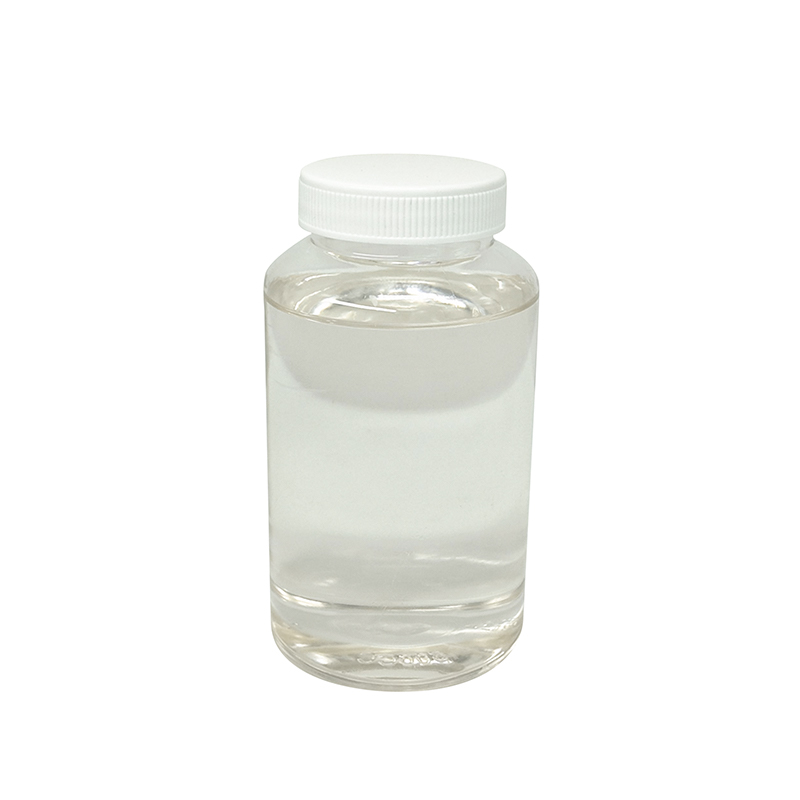 Custom 32# High Pressure Anti-Wear Hydraulic Oil For CNC Machines Suppliers, FacLeanon Petroleum Technology Co., Ltd. Is China Custom 32# High Pressure Anti-Wear Hydraulic Oil For CNC Machines Suppliers, Factory, Expo...View Product →
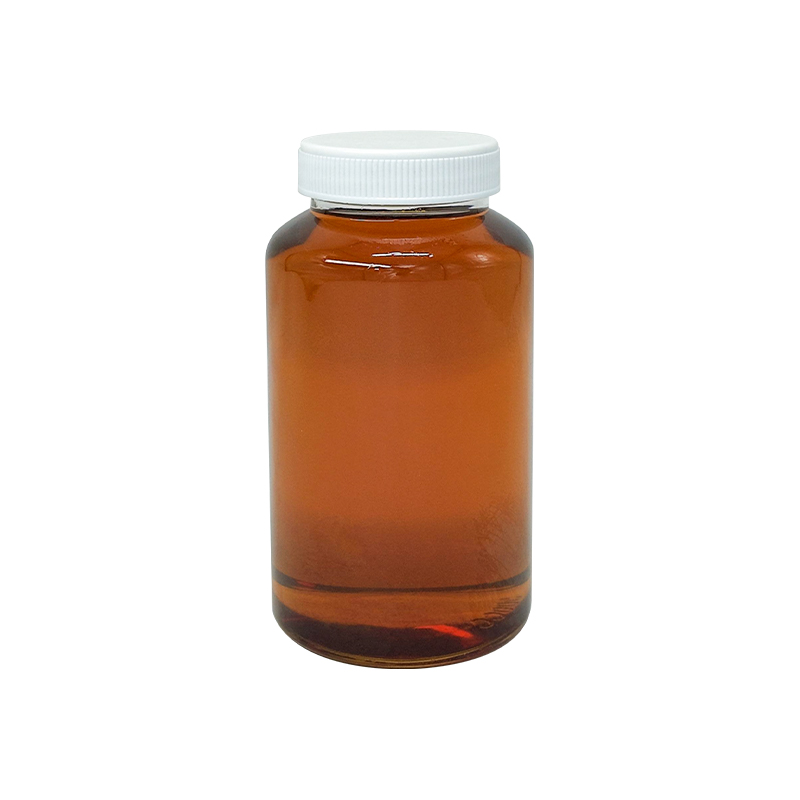 Custom CK-4 5W40 Full Synthetic Heavy Duty Diesel Engine Oil for Trucks & FleetsLeanon Petroleum Technology Co., Ltd. Is China Custom CK-4 5W40 Full Synthetic Heavy Duty Diesel Engine Oil for Trucks & Fleets Suppliers...View Product →
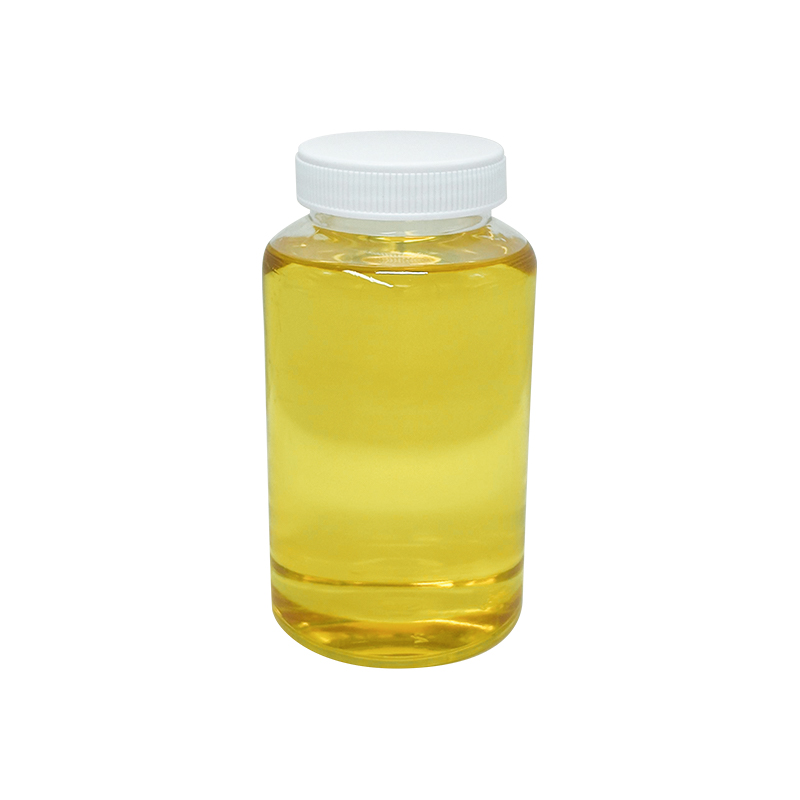 Custom SQ 5W-30 Full Synthetic Gasoline Engine Motor Oil for Cars & Light Duty VLeanon Petroleum Technology Co., Ltd. Is China Custom SQ 5W-30 Full Synthetic Gasoline Engine Motor Oil for Cars & Light Duty Vehicles Su...View Product →
This coverage lets a single wholesale supplier consolidate multiple purchase orders. It also creates a natural path for product line expansion as you learn which formulations perform best in your market.
How OEM/ODM Support Changes the Wholesale Equation
For many wholesale buyers, the real value is not just selling an existing brand. It is launching their own brand. A lubricant supplier with OEM/ODM experience can provide more than private-label filling. LEANON positions its offer as a "complete brand launch solution," which typically includes product formulation, package design, technical datasheets, and compliance documentation. In practice, this means the supplier can coordinate the complete journey from base oil selection and additive chemistry to bottle shape, artwork, and carton packing, while keeping costs realistic for the target market.
This changes how a distributor competes. Instead of being limited to a supplier's own brand, you can build equity in your own name. The factory's experience with international markets (the website offers English, Russian, Spanish, Arabic, and Chinese) suggests that language and local certification requirements are part of the conversation.
You should ask specific questions about minimum order quantities, custom formulation lead times, packaging options, and how the supplier handles technical queries from your customers. A factory with in-house R&D will usually answer those questions more confidently than a trader.
A Practical Checklist for Choosing a Wholesale Lubricant Supplier
If you are comparing several candidates, use the following checklist as a starting point. It keeps the evaluation focused on factors that affect your long-term supply chain.
- Verify that the supplier is the actual manufacturer or has a clear contractual relationship with the plant.
- Check production capacity and minimum order lead times for the products you intend to import or distribute.
- Review quality certificates and whether the lab conducts routine testing for viscosity, flash point, and cold-start performance.
- Ask for formulation support if your market requires specific SAE grades, API/ACEA levels, or OEM approvals.
- Confirm that the supplier can handle private-label packaging, including bottle design, labels, and carton artwork.
- Evaluate communication: do you receive a clear technical answer, or a vague sales pitch?
Once you have a shortlist, request samples and test them against your own fleet or equipment. A typical evaluation might start with a basic SAE grade check, then move to a field trial in a small fleet. Watch for changes in oil pressure, fuel consumption, and oxidation after several thousand kilometers. A serious wholesale supplier will be ready to support a trial program with data and application assistance.
Final Thoughts: Build a Supply Chain Around a Manufacturer, Not a Trader
Wholesale lubricant oil suppliers are not all equivalent. The ones with direct manufacturing capability offer better control over quality, delivery, and customization. They also reduce the risk of counterfeiting and specification drift, both of which are chronic problems in the lubricant trade. Lubricant purchasing is not a spot transaction; it is a relationship that affects your operating margin for years.
LEANON combines an integrated production base, broad product coverage, serious quality certifications, and a business model built around OEM/ODM cooperation. That makes it a useful benchmark when you evaluate potential partners. Start with the highest-turnover products, test consistency across multiple batches, and then move to a broader range as trust builds. If you want to discuss your target market and product mix, the company's sales team can be reached through the website's quote request page.
HOT NEWS



Contact
 leanon2023@163.com
 + 86 - 4006663580
 Industrial Concentration Zone, Xinjian Town, Yixing City, Wuxi City, Jiangsu Province, China
Copyright © Leanon Petroleum Technology Co., Ltd. All Rights
Reserved
Wholesale Private Label Lubricants Manufacturers
