

 English
  русский
  Español
  عربى
عربى  中文简体
中文简体

 Industry News
Home / News & Share / Industry News / How to Evaluate Lubricant Manufacturers in 2026: A Complete Practical Guide
How to Evaluate Lubricant Manufacturers in 2026: A Complete Practical Guide
200+ proven lubricant solutions delivered
Content
- 1 Start With Capability, Not Just Name Recognition
- 2 The Lubricant Manufacturing Landscape in 2026
- 3 What to Evaluate Before You Buy
- 4 Product Range: A Checklist That Matches Your Market
- 5 The Role of OEM/ODM Services in a Competitive Lubricant Brand
- 6 Trends That Should Shape Your Sourcing Decision in 2026
- 7 Putting the List Into Practice
Start With Capability, Not Just Name Recognition
Choosing a lubricant manufacturer is not the same as choosing a brand to put in your car. For an importer, distributor, or brand owner, the decision starts with production capability, certification depth, product coverage, and the supplier's ability to execute a brand strategy. The largest global names may dominate market-share rankings, but they are rarely the right conversation partner for a private-label program or a regional brand that needs responsive formulation support.
This guide explains what to look for in a lubricant manufacturer, how to assess a supplier's real strengths, and why companies such as LEANON Petroleum Technology — a 150,000-tonne-per-year lubricant producer — are becoming the preferred partner for brands that want control over quality without building a plant themselves.
The Lubricant Manufacturing Landscape in 2026
The global lubricants market remains concentrated among large integrated energy firms. Names such as Shell, ExxonMobil, BP, TotalEnergies, Chevron, Sinopec, and PetroChina appear at the top of most industry rankings, supported by enormous distribution networks and decades of brand equity. These players set many of the technical benchmarks and are often the standard-setters behind OEM approvals.
Below that tier, hundreds of independent manufacturers supply the private-label, regional, and specialty segments. Independent plants are frequently more flexible about batch sizes, custom formulation, and turnaround time. They can align their production schedules with a customer's brand launch rather than imposing a rigid global catalogue. For many buyers, that combination of technical competence and commercial flexibility is exactly what is missing from a large multinational supplier.
What to Evaluate Before You Buy
Quality Systems and Certifications
Start with certificates, but look beyond the paper. A credible manufacturer should hold ISO 9001 for quality management, ISO 14001 for environmental management, ISO 45001 for occupational health and safety, and, for automotive supply, IATF 16949. These systems indicate that processes are documented, audited, and repeatable. The presence of an in-house CNAS laboratory adds another layer of confidence, because it means fresh oil testing and quality checks are not always outsourced to a third party.
Scale, Consistency, and Supply Security
Production capacity matters more than the annual report suggests. A larger, modern plant can smooth out demand spikes, maintain consistent blending parameters, and keep raw-material inventory at levels that protect customers from supply disruptions. LEANON's facility, for example, occupies roughly 80,000 square meters, produces up to 150,000 tonnes per year, and is described by the company as an intelligent factory. That scale supports both bulk exports and small private-label batches without forcing customers to choose one or the other.
Formulation and Standards Compliance
Ask about specific classifications, not vague marketing language. For engine oils, this means API, ACEA, and/or OEM specifications. For industrial lubricants, it means ISO viscosity grades and, where relevant, DIN or similar standards; for brake fluids, DOT grades; for coolants, freeze-point and conductivity specifications. A competent manufacturer should be able to say not just "we make synthetic oil" but also "this product meets API SQ, ACEA C3, or Dexron VI" depending on the product. The distinction becomes critical when you sell into markets that enforce performance labels.
Product Range: A Checklist That Matches Your Market
A manufacturer's product range is a mirror of its technical maturity. Before you start negotiating, map your target market against the categories below. A supplier that covers multiple categories with real formulations can simplify logistics, reduce approval time, and give your brand room to grow.
| Category | Typical Applications | What to Verify |
|---|---|---|
| Gasoline engine oil | Passenger cars, SUVs, light commercial vehicles | API/ACEA classifications, viscosity grades, synthetic or mineral base oil |
| Diesel engine oil | Trucks, off-road equipment, agricultural machinery | API category, emission-stage coverage (Euro II to Euro VI), OEM approvals |
| Transmission fluid | AT, CVT, DCT, manual and industrial gearboxes | OEM fluid specifications such as Dexron, Mercon, or ISO gear-oil grades |
| Brake fluid | Hydraulic braking systems | DOT 3, DOT 4, or DOT 5.1 wet and dry boiling points |
| Hydraulic oil | CNC machines, agricultural equipment, industrial hydraulics | ISO viscosity grade, anti-wear additives, water separation |
| Compressor oil | Piston and rotary screw compressors | Mineral vs synthetic base oil, viscosity, thermal stability |
| Coolant / EV coolant | Engine cooling, battery and motor thermal management | Freeze point, corrosion protection, low electrical conductivity for EVs |
For gasoline engine oil, a practical supplier should be able to handle both modern and older engines. That means offering low-viscosity full synthetics for current vehicles as well as higher-viscosity grades for high-mileage engines. Take, for example, an SQ 5W-30 full synthetic gasoline engine oil that supports the API SQ service category: it shows the manufacturer can produce current-spec passenger-car lubricants rather than recycling legacy formulations.
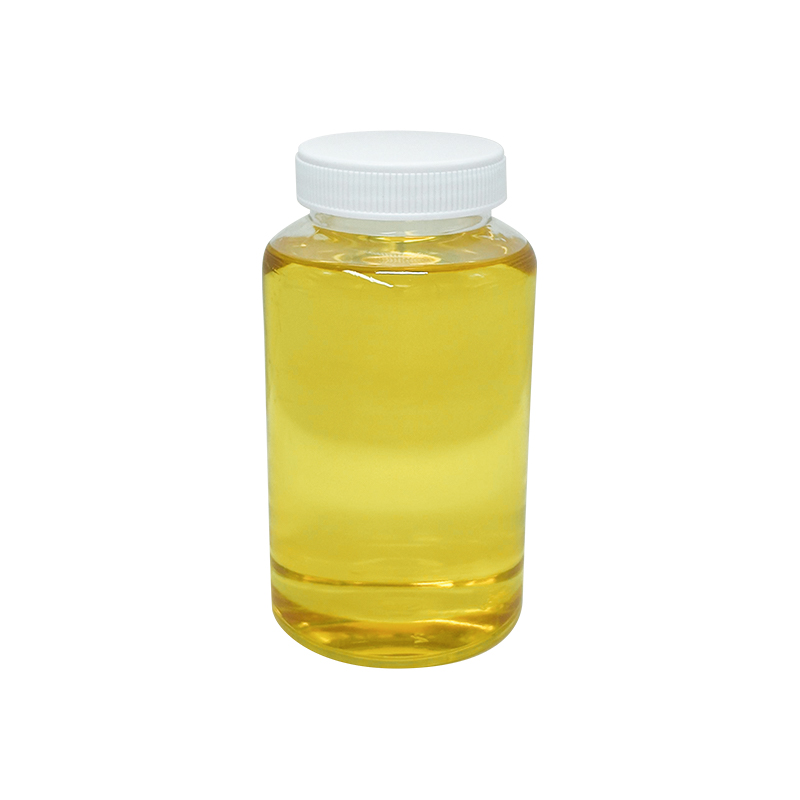 Custom SQ 5W-30 Full Synthetic Gasoline Engine Motor Oil for Cars & Light Duty VLeanon Petroleum Technology Co., Ltd. Is China Custom SQ 5W-30 Full Synthetic Gasoline Engine Motor Oil for Cars & Light Duty Vehicles Su...View Product →
Industrial buyers should look beyond engine products. A manufacturer that can produce 32-grade anti-wear hydraulic oil for CNC machines is likely to understand the cleanliness, water separation, and anti-wear requirements of precision equipment. The same logic applies to gear oils and compressor oils: if a supplier only sells engine oil, it may lack the competence to support industrial maintenance programs.
 Custom 32# High Pressure Anti-Wear Hydraulic Oil For CNC Machines Suppliers, FacLeanon Petroleum Technology Co., Ltd. Is China Custom 32# High Pressure Anti-Wear Hydraulic Oil For CNC Machines Suppliers, Factory, Expo...View Product →
The fastest-growing part of the range in 2026 is thermal management. Electric vehicle programs require low-conductivity coolants that protect batteries and power electronics without creating short-circuit risks. This is a separate development exercise from conventional engine coolant, not a label change.
The Role of OEM/ODM Services in a Competitive Lubricant Brand
Once you have confirmed technical basics, examine the supplier's willingness to build a product around your brand. OEM and ODM services are not value-adds; for many importers and distributors, they are the main reason to work with an independent manufacturer. A factory that offers private-label filling, custom packaging, specification development, and brand launch support can compress the time between a business decision and a finished product on a shelf.
LEANON describes its offer as a complete brand startup solution. In practical terms, that covers product formulation, packaging design support, documentation, and consistent quality control across multiple product lines. The value of this approach is obvious when you compare it with trying to assemble a brand by buying from three different factories and then coordinating your own logistics and compliance files.
Another advantage of working with a single manufacturer is the ability to align product families. A brand can launch with a full portfolio — engine oils, transmission fluids, coolants, and hydraulic oils — under one consistent quality standard. That simplifies inventory management, marketing, and customer service.
Trends That Should Shape Your Sourcing Decision in 2026
Three trends are changing how buyers evaluate lubricant manufacturers. First, tighter emissions regulations are pushing diesel engine oil specifications forward, from Euro V to Euro VI and beyond, with corresponding API CK-4 or newer requirements. Second, fuel economy standards are accelerating demand for low-viscosity and low-SAPS engine oils. Third, electrification is creating demand for specialized coolants and thermal fluids.
A manufacturer that only has a conventional product line will struggle to support these shifts. If you are planning to enter the electric vehicle aftermarket, ask to see data for low-conductivity coolant. For example, a low-conductivity 35 °C EV coolant should be tested for conductivity, freeze protection, and material compatibility before it is shipped to your market.
 Custom Low Conductivity -35°C Electric Car Antifreeze Coolant Fluid(EVC-Ⅱ-35) SuLeanon Petroleum Technology Co., Ltd. Is China Custom Low Conductivity -35°C Electric Car Antifreeze Coolant Fluid(EVC-Ⅱ-35) Suppliers, F...View Product →
Sustainability is also part of the evaluation. Buyers increasingly ask about carbon footprint, waste management, and environmental reporting. The principle is simple: choose a supplier that is prepared to document environmental performance, not just promise it.
Putting the List Into Practice
A lubricant manufacturer should be assessed the way you would assess any long-term production partner: through evidence of certifications, physical capacity, formulation depth, product range, and commercial flexibility. Rankings of the world's largest companies are useful background, but they do not tell you whether a supplier can build your brand, meet your delivery windows, or adapt a formula to your market's regulations.
Start with a shortlist, request technical data sheets, inspect laboratory and factory standards, and ask the manufacturer to walk you through a sample order. If the supplier can produce current-spec engine oils, industrial lubricants, and EV coolants under one roof, and is willing to put that capability behind your brand, you have found the right type of partner. LEANON's production platform is one example of that model; testing it against your own requirements is the next step.
HOT NEWS



Contact
 leanon2023@163.com
 + 86 - 4006663580
 Industrial Concentration Zone, Xinjian Town, Yixing City, Wuxi City, Jiangsu Province, China
Copyright © Leanon Petroleum Technology Co., Ltd. All Rights
Reserved
Wholesale Private Label Lubricants Manufacturers
