

 English
  русский
  Español
  عربى
عربى  中文简体
中文简体

 Industry News
How Often Should You Replace Brake Fluid for Optimal Safety?
200+ proven lubricant solutions delivered
Content
- 1 The Science of Degradation: Why Brake Fluid Fails
- 2 Establishing Your Baseline: Standards, Specifications, and Intervals
- 3 Quantitative Condition Monitoring: From Scheduled to Predictive Maintenance
- 4 The Replacement Procedure: Ensuring System Integrity
- 5 Industry Outlook: Evolving Standards and Formulations
- 6 Frequently Asked Questions (FAQ)
For fleet managers, automotive workshop owners, and industrial procurement specialists, brake fluid maintenance transcends simple vehicle upkeep—it is a critical operational safety protocol and a direct factor in total cost of ownership. Moving beyond generic "every two years" advice, this guide delivers an engineering-level analysis. We will dissect the physicochemical properties of brake fluid degradation, establish data-driven replacement intervals based on measurable variables, and provide actionable diagnostics to formulate a predictive maintenance strategy for your fleet or service business.
The Science of Degradation: Why Brake Fluid Fails
At its core, brake fluid replacement is a battle against thermodynamics and hygroscopy. Modern glycol-ether based fluids (DOT 3, 4, 5.1) are engineered for high boiling points and consistent viscosity but are inherently hygroscopic. The primary failure mode is not age, but the accumulation of absorbed water, which leads to a precipitous drop in the fluid's wet boiling point.
When hydraulic pressure and heat from braking are applied, this entrained water can vaporize locally, forming compressible gas pockets—a phenomenon known as vapor lock. This results in a spongy pedal, increased stopping distance, and, in extreme cases, complete brake failure. The rate of water ingress is the key variable, influenced by climate, system design, and maintenance cycles. For instance, the brake fluid replacement cycle in humid areas can be up to 50% shorter than in arid climates due to accelerated moisture absorption through microscopic pores in rubber hoses and reservoir seals.
Establishing Your Baseline: Standards, Specifications, and Intervals
A professional maintenance schedule starts with the manufacturer's OEM specifications, but must be contextualized within broader industry standards and operational realities.
OEM Recommendations vs. Performance Standards
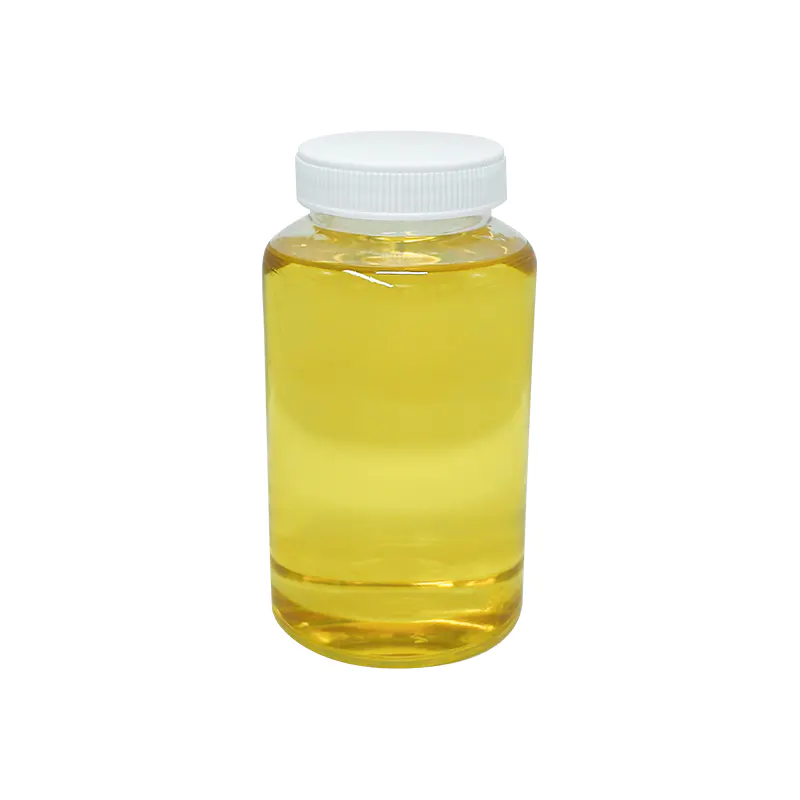
While OEM manuals provide a conservative baseline (often 2 years/40,000 km), they are designed for average use. Performance and safety-critical applications demand adherence to higher fluid performance benchmarks, primarily the SAE J1703, J1704, and FMVSS No. 116 standards, which define minimum dry and wet boiling points for DOT classifications. For example, while a standard DOT 4 fluid meets a minimum wet boiling point of 155°C, a high-performance DOT 4 variant used in brake fluid selection for high-performance vehicles may exceed 180°C, offering a significant safety margin under thermal stress.
The Criticality of Fluid Compatibility
Mixing incompatible fluids is a primary cause of systemic failure. Understanding DOT 5.1 brake fluid compatibility is non-negotiable. DOT 3, 4, and 5.1 (glycol-based) are generally compatible and miscible, though mixing reduces the performance to the lowest spec in the system. However, DOT 5 (silicone-based) is absolutely incompatible with glycol-based systems. Mixing can cause phase separation, rubber component swelling, and dramatically reduced lubricity, leading to immediate seal failure.
The following table clarifies the core technical specifications and compatibility matrix:
| Standard | Primary Base | Minimum Dry Boiling Point | Minimum Wet Boiling Point (ERBP) | Key Compatibility Note |
| DOT 3 | Glycol Ether | 205°C | 140°C | Compatible with DOT 4, DOT 5.1. Hygroscopic. |
| DOT 4 | Glycol Ether/Borate Ester | 230°C | 155°C | Compatible with DOT 3, DOT 5.1. Higher performance, hygroscopic. |
| DOT 5.1 | Glycol Ether/Borate Ester | 260°C | 180°C | Compatible with DOT 3, DOT 4. Highest boiling point among glycol-based fluids. |
| DOT 5 | Silicone | 260°C | 180°C | NOT compatible with DOT 3, 4, or 5.1. Hydrophobic. |
Quantitative Condition Monitoring: From Scheduled to Predictive Maintenance
Progressive maintenance departments are shifting from time-based to condition-based replacement. The definitive method for assessing fluid integrity is quantitative water content measurement.
Methods for Brake Fluid Water Content Testing
Visual inspection for color or clarity is notoriously unreliable. The professional standard is the use of a dedicated brake fluid water content testing method via a conductivity-based electronic tester. These devices provide a direct percentage readout of water content by volume.
- Action Thresholds: A reading below 1% is considered safe. Between 1% and 3%, the fluid is degrading and should be scheduled for replacement. Any reading above 3% indicates an immediate requirement for replacement, as the wet boiling point has fallen into a dangerous range.
- Fleet Application: Implementing regular tester checks on a representative sample of fleet vehicles allows for data-driven interval optimization, potentially extending service life in dry conditions or preemptively shortening it in harsh environments.
The Replacement Procedure: Ensuring System Integrity
Even with the correct fluid, improper installation compromises the entire system. A complete flush is mandatory to remove old fluid, contaminants, and water.
Professional Flush vs. DIY Procedure
For commercial workshops, a pressure bleeder is the recommended tool, ensuring a one-person operation with a consistent, bubble-free flow from the master cylinder to each caliper or wheel cylinder. For those evaluating a DIY brake fluid replacement procedure for light fleets or personal mastery, the manual two-person "pump-and-hold" method is viable but carries higher risk of incomplete flushing or air introduction.
Critical Technical Steps for a Complete Flush:
- Use fresh, sealed fluid from a known-quality manufacturer like LEANON Petroleum Technology Co., Ltd., whose CNAS-accredited laboratory ensures batch-to-batch consistency and specification compliance.
- Follow the vehicle-specific bleeding sequence (often furthest from the master cylinder to closest) to efficiently purge the entire hydraulic circuit.
- Bench bleed the master cylinder if it was run dry or replaced.
- Finally, conduct a post-service road test with multiple controlled stops to verify pedal firmness and system function.
Industry Outlook: Evolving Standards and Formulations
The brake fluid landscape is not static. Driven by the demands of electric vehicles with regenerative braking and advanced driver-assistance systems (ADAS), new formulations and standards are emerging. According to the latest report by SAE International, there is active R&D into next-generation fluids with even higher wet boiling points, lower viscosity for optimized ESP/ABS pump performance, and enhanced copper corrosion inhibition to protect modern sensor-laden systems. Furthermore, the International Organization for Standardization (ISO) is working on updating its fluid classification (ISO 4925) to better align with these evolving performance requirements, emphasizing the need for fluids that maintain stability over longer intervals in sealed EV systems.
Source: SAE International - Brake Fluid Standards for EVs
This evolution underscores the importance of partnering with a forward-looking, R&D-driven manufacturer. Since its founding in January 2017, LEANON Petroleum Technology Co., Ltd. has invested 200 million RMB in a modern lubricant production facility with an annual capacity of 150,000 tons. The company's commitment to innovation is evidenced by its IATF 16949 certification and CNAS national laboratory accreditation, ensuring its product development—including advanced brake fluid formulations—is aligned with these upcoming industry shifts and provides the performance and safety margins required by professional users.
Frequently Asked Questions (FAQ)
1. Can I simply top up old brake fluid with new fluid?
No. Topping off only dilutes the water content in the reservoir temporarily. The contaminated fluid throughout the entire hydraulic system remains, and the overall wet boiling point is not sufficiently restored. A complete system flush is the only reliable procedure.
2. How does climate definitively affect my replacement interval?
Atmospheric humidity is the primary external driver of moisture absorption. Fluids in vehicles operating in tropical or coastal environments (humid area brake fluid replacement cycles) can reach a 3% water content threshold in 12-18 months, whereas in arid climates, it may take 3-4 years. Condition monitoring with a tester is essential for accurate scheduling.
3. Is a higher DOT rating always better?
Not universally. While DOT 5.1 offers the highest boiling points among glycol-based fluids, its compatibility with DOT 5.1 brake fluid rules mean it is ideal for high-stress applications. However, for a standard fleet vehicle operating within OEM specs, a high-quality DOT 4 fluid may provide the optimal balance of performance and cost. Always consult the vehicle's manual first.
4. What are the risks of a DIY fluid change?
The main risks in a DIY brake fluid replacement procedure are incomplete fluid exchange, failing to remove all trapped air (causing a spongy pedal), and introducing moisture or contaminants. Using the wrong fluid type (e.g., DOT 5 in a DOT 4 system) causes catastrophic seal failure. If proper tools and procedures aren't followed, professional service is strongly recommended.
5. Why do my brakes still feel soft after a fluid change?
A soft pedal post-service almost always indicates residual air in the hydraulic system. Air is highly compressible compared to fluid. This requires re-bleeding the system, strictly following the correct sequence and ensuring the master cylinder reservoir does not run dry during the process. It can also indicate worn mechanical components not addressed by a fluid change.
HOT NEWS



Contact
 leanon2023@163.com
 + 86 - 4006663580
 Industrial Concentration Zone, Xinjian Town, Yixing City, Wuxi City, Jiangsu Province, China
Copyright © Leanon Petroleum Technology Co., Ltd. All Rights
Reserved
Wholesale Private Label Lubricants Manufacturers
