

 English
  русский
  Español
  عربى
عربى  中文简体
中文简体

 Industry News
Home / News & Share / Industry News / Automotive Lubricants Buying Guide: Specs, Grades, and OEM Approval Sourcing
Automotive Lubricants Buying Guide: Specs, Grades, and OEM Approval Sourcing
200+ proven lubricant solutions delivered
Content
- 1 What Automotive Lubricants Are: A Definition That Survives an Audit
- 2 Viscosity Grades: What 0W-20, 5W-30, and 20W-50 Actually Promise
- 3 API, ACEA, and OEM Approvals: The Three Layers Behind a Spec Sheet
- 4 Gasoline and Diesel Engines: Two Different Lubricant Problems
- 5 Transmission, Brake, and Coolant Fluids: Where Lubricant Programs Fail
- 6 Sourcing Automotive Lubricants: What a Supplier Audit Should Confirm
- 7 Private Label and OEM Programs: Building a Range That Clears Customs
- 8 Frequently Asked Questions About Automotive Lubricants
A distributor's line card looks tidy: four engine oil grades, one transmission fluid, one coolant, one brake fluid. Then the first warranty claim arrives, and the only question left is whether the bottle in that engine holds the approval the vehicle maker publishes, or merely claims to be suitable for it.
That gap between a specification and an approval is where sourcing budgets disappear. Engine, transmission, brake, and cooling systems each run their own standards, and a product claiming to cover six of them rarely performs well in any. Getting automotive lubricants right comes down to matching four data points to each application: SAE viscosity grade, API service category, ACEA sequence, and the OEM approval list.
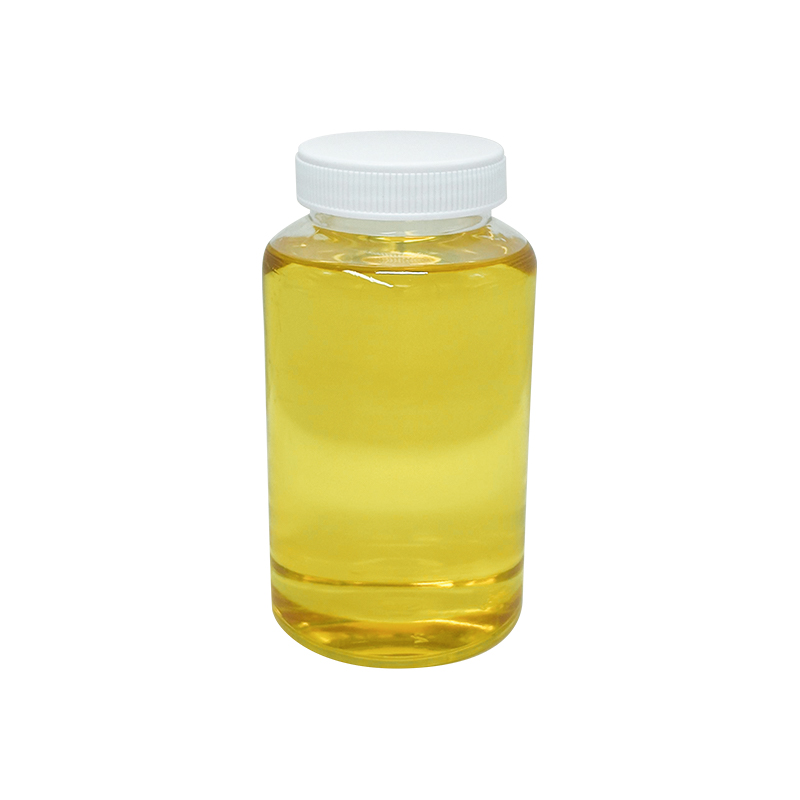 Automotive Lubricants for Engine, Gear, and Brake SystemsReview engine oil, gear oil, and brake fluid ranges by SAE grade, API/ACEA sequence, and documented OEM approvals before sourcing.View Product →
Approval is a documented test result, not a marketing adjective. A fluid either appears on the manufacturer's approval list, or it does not.
What Automotive Lubricants Are: A Definition That Survives an Audit
Automotive lubricants are finished fluids built from base oils, mineral, synthetic, or blended, plus roughly 15 to 30 percent performance additives, formulated to separate moving metal surfaces, carry heat away from bearings, and neutralise combustion acids.
The base oil sets how the fluid behaves at temperature. The additive package decides how long it keeps working: detergents and dispersants hold soot in suspension, anti-wear chemistry forms a sacrificial film on cams and bearings, friction modifiers cut drag, and viscosity index improvers keep the oil pumpable when cold and protective when hot.
For a purchasing team, that chemistry reduces to four questions:
- Does the SAE grade match the engine's cold-start and operating temperature requirement?
- Does the API or ACEA category match the engine generation and emission hardware?
- Is the formulation low-SAPS or high-SAPS, and does the exhaust aftertreatment care?
- Is there a written OEM approval, or only a compatibility statement?
An automotive lubricant is a fluid that meets a published performance standard, such as an SAE grade, an API service category, or an ACEA sequence, and where the application demands it, holds a formal OEM approval for a specific engine or transmission family.
Viscosity Grades: What 0W-20, 5W-30, and 20W-50 Actually Promise
The viscosity grade answers two questions and implies a third. The number before the W is a winter rating: 0W stays pumpable near minus 40 degrees Celsius, 5W near minus 35, 15W near minus 20, and 20W near minus 15. The number after the W is kinematic viscosity at 100 degrees Celsius. The implied third value is high-temperature high-shear viscosity at 150 degrees Celsius, the parameter that tracks bearing protection under load.
| SAE grade | Typical HTHS range | Best-fit application |
| 0W-20 | 2.6 to 2.9 | Modern gasoline engines, hybrids, low-friction designs |
| 5W-30 | 2.9 to 3.5 | Mainstream gasoline and light diesel engines |
| 5W-40 | 3.5 to 3.9 | Turbocharged gasoline, higher mileage engines |
| 10W-40 | 3.6 to 3.9 | Older engines, warm climates, blended fleets |
| 15W-40 | 4.0 to 4.3 | Heavy-duty diesel trucks, mixed fleets |
| 20W-50 | 4.5 to 5.0 | High-mileage and classic engines, hot climates |
Read the trend rather than the ranking. As the grade thickens, high-temperature high-shear viscosity rises and fuel economy falls. In an engine designed around a 0W-20 with a variable-displacement oil pump, a 20W-50 raises pumping losses, slows cold-start flow to the bearings, and can alter variable valve timing response.
API, ACEA, and OEM Approvals: The Three Layers Behind a Spec Sheet
Three standards systems govern an automotive lubricant, and each answers a different question. API service categories set minimum bench and engine test performance. ACEA sequences add European performance plus chemical limits on sulphated ash, phosphorus, and sulphur. OEM approvals confirm that a specific vehicle manufacturer has tested that exact formulation.
The third layer is the one buyers underestimate. A formulator can self-certify against an API category and print that the oil meets CI-4 without holding a formal approval for any European truck engine. Those two claims are not equivalent, and only one of them survives a warranty dispute.
| Emission tier | Typical API category | Typical application |
| Euro II and below | CD, CF-4 | Older trucks, off-road equipment, fleets without aftertreatment |
| Euro III | CH-4 | Mixed truck fleets with moderate soot loading |
| Euro V | CI-4 | Heavy-duty trucks with exhaust gas recirculation |
| Euro VI | CK-4 | DPF and SCR equipped trucks, low-SAPS requirement |
| Gas engines | Dedicated CNG and LNG oil | Natural gas engines needing low ash and high oxidation stability |
Ask for the approval document, the test method, and the viscosity grade it covers. Approvals are granted to a formulation and a production site, not to a brand name.
Gasoline and Diesel Engines: Two Different Lubricant Problems
Gasoline and diesel engines do not degrade oil the same way, so one fluid rarely serves both well.
Gasoline engines
- Low-speed pre-ignition in turbocharged direct-injection engines damages pistons, which is why API SN Plus, SP, and later categories add a dedicated test.
- Soot loading stays low, so additive focus shifts to deposit control on pistons, rings, and intake valves.
- Fuel economy matters, so friction modifiers and grades from 0W-20 to 5W-40 dominate.
- Gasoline particulate filters need low-SAPS chemistry, typically ACEA C3 or C5.
Diesel engines
- Soot loading is the main threat, so dispersant and detergent levels run higher.
- Total base number is higher, commonly 8 to 12 mg KOH per gram, to neutralise stronger acids.
- Shear stability under sustained load matters more than cold-flow fuel economy.
- Euro VI trucks with DPF and SCR hardware need low-SAPS oil, such as API CK-4 or ACEA E9.
The practical consequence: topping up a Euro VI truck with a gasoline-spec oil raises ash loading in the particulate filter, while a CK-4 diesel oil leaves low-speed pre-ignition unaddressed in a turbocharged gasoline engine.
Mixing risk
Never top up a diesel with gasoline-spec oil, or a gasoline engine with a high-ash diesel product, unless the OEM approval list explicitly covers both applications.
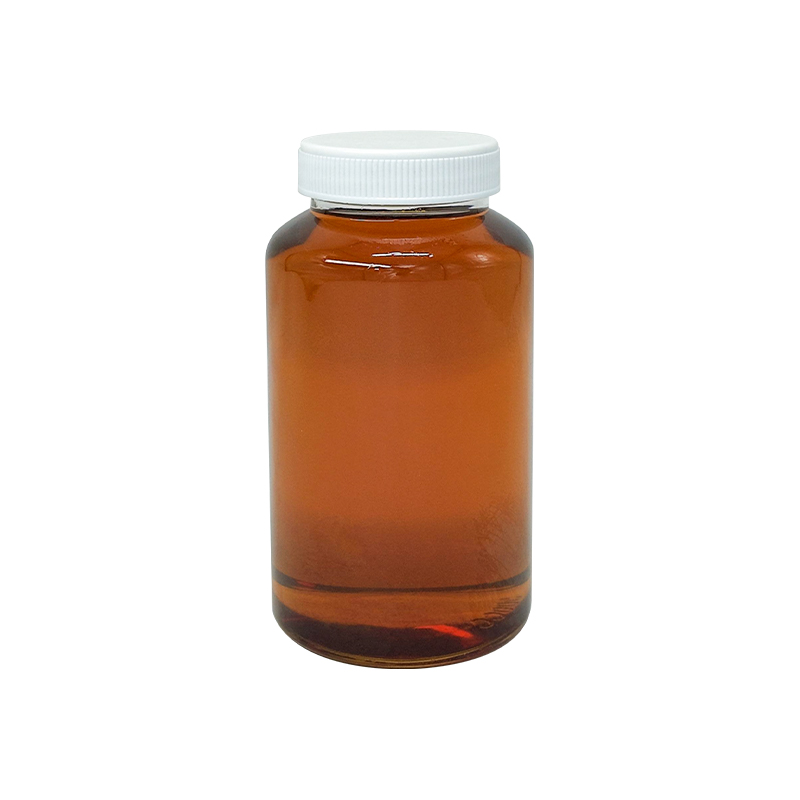 CK-4 5W-40 Full Synthetic Heavy Duty Diesel Engine OilFor long-haul trucks and fleets needing CK-4 diesel protection, cold-start flow, soot control, and extended drain performance in China VI/China V vehicles.View Product →
Transmission, Brake, and Coolant Fluids: Where Lubricant Programs Fail
Drivetrain, braking, and thermal fluids cause more field failures than engine oil, because they get specified with the phrase compatible with instead of an exact approval.
- Automatic transmission fluid: Dexron VI covers many six-speed units, but nine-speed GM and Japanese units need their own friction targets.
- CVT fluid: friction coefficient is part of the transmission design, so full synthetic POE-based fluid holds the curve as it ages.
- DCT fluid: wet clutch packs need stable friction under heat, which a generic ATF will not deliver.
- Gear oils: 85W-90 and 85W-140 GL-5 products cover hypoid gears, chosen by ambient temperature and load.
- Coolants: organic low-silicate formulas protect mixed-metal fuel systems, while EV battery cooling needs low-conductivity fluid rated at 25, 35, or 45 degrees.
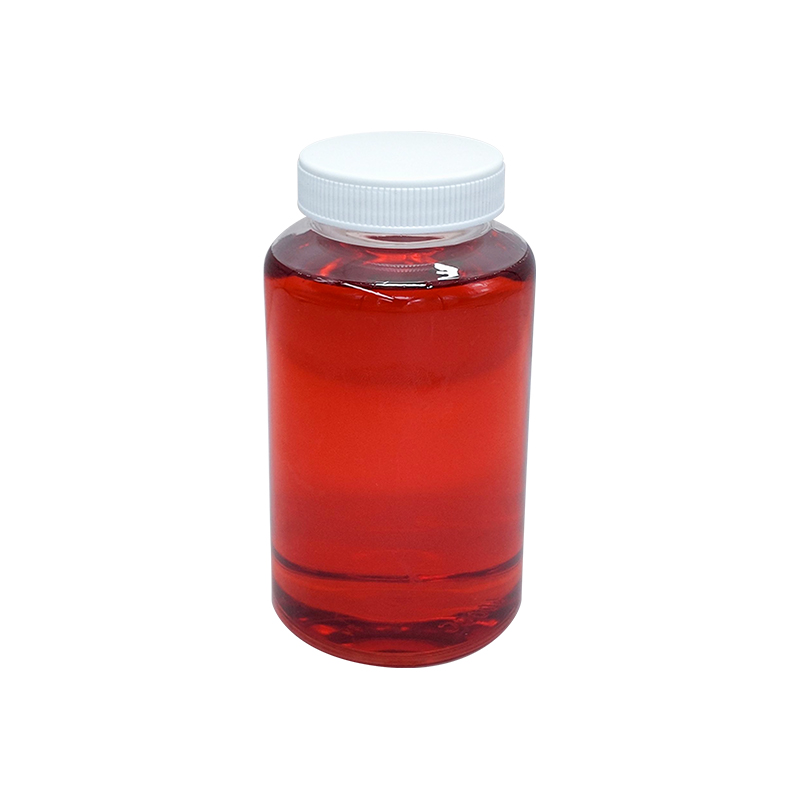 ATF-9L & 9MB Dexron VI Automatic Transmission Fluid for GMDexron VI automatic transmission fluid for GM vehicles, available in 9-liter and 9-milliliter packs, supporting shifting, thermal, and electronics compatibility.View Product →
Brake fluid shows how quickly a vague specification becomes a safety issue. FMVSS 116 sets minimum dry boiling points of 205 degrees Celsius for DOT 3, 230 for DOT 4, and 260 for DOT 5.1.
Minimum dry boiling point by brake fluid grade
Bars are scaled to 260 degrees Celsius, the highest minimum dry boiling point referenced in FMVSS 116.
Glycol-based brake fluid absorbs moisture, so the boiling point falls toward the wet value and hard braking can boil fluid in the caliper, producing a pedal that travels to the floor. Replacement is based on time in service, not on colour or level.
Never mix glycol-based brake fluid with silicone DOT 5 fluid, and never mix an OAT coolant with a silicate-heavy conventional coolant. Both mixtures cause fluid breakdown rather than harmless dilution.
Sourcing Automotive Lubricants: What a Supplier Audit Should Confirm
Audit four things before signing: real production capacity, certified quality systems, in-house test capability, and a documented approval list.
150,000 t
Annual blending capacity
120 mu
Plant site, about 80,000 square meters
2017
Year the manufacturing facility was founded
IATF 16949
Automotive supply chain certification
LEANON Petroleum Technology Co., Ltd. runs a 150,000-ton-per-year blending plant on a 120 mu site and holds ISO 9001, ISO 14001, ISO 45001 and IATF 16949 certification, which most fleet buyers treat as a precondition rather than an advantage.
In-house testing matters more than a certificate wall. Running viscosity, flash point, and elemental analysis internally shortens an approval cycle and catches batch drift before a container ships. Check labelling as well: the API donut, ACEA sequence, approval numbers, and batch coding must match the destination market's rules.
A capacity figure without a certification scope is a marketing number. Ask which site, which line, and which products the certificate actually covers.
Private Label and OEM Programs: Building a Range That Clears Customs
Start with the vehicles and equipment sold in the target market, not with the supplier catalogue. Most private label ranges that survive run five to seven SKUs.
- Map the top-selling vehicle and equipment segments, then list the approvals each one requires.
- Select base oil and additive package per approval, not per price point alone.
- Validate with bench and engine tests, and file the reports with the batch records.
- Designate packaging and labels for each market's regulatory requirements.
- Run a pilot batch and verify fill volume, seal integrity, and batch traceability before release.
OEM and ODM programs shorten that sequence, because the formulator already holds base formulas, test data, and approval documentation.
Frequently Asked Questions About Automotive Lubricants
These four questions come up most often in fleet and private label sourcing conversations.
Can I use diesel engine oil in a gasoline engine?
Only if the product carries the approval your engine requires. Modern CK-4 diesel oils are low-SAPS and mechanically robust, but they are not tested for low-speed pre-ignition, the failure mode that API SP and SQ categories address in turbocharged gasoline engines.
How often should brake fluid be replaced?
Most manufacturers specify every two years regardless of mileage, because glycol fluid absorbs moisture continuously. Water content above 3 percent is a practical trigger for replacement on vehicles with unknown service history.
Is a thicker oil better for an older engine?
Sometimes, but not automatically. A high-mileage 20W-50 can reduce oil consumption in a worn engine with larger clearances, and many older designs were specified for it. In a modern engine with variable valve timing, the approved grade remains the safer choice.
What separates a lubricant that meets a specification from one that is approved?
A meets claim is a self-declaration against a published standard. An approval means the vehicle manufacturer tested that formulation and listed it. The first is marketing language; the second is a documented result that protects the warranty.
HOT NEWS



Contact
 leanon2023@163.com
 + 86 - 4006663580
 Industrial Concentration Zone, Xinjian Town, Yixing City, Wuxi City, Jiangsu Province, China
Copyright © Leanon Petroleum Technology Co., Ltd. All Rights
Reserved
Wholesale Private Label Lubricants Manufacturers
